
Booking your first Disney cruise is a lot to get your head around. Disney Cruise Line does things differently from other cruise lines, and the same questions come up again and again from first-time sailors. Here are the most common ones, with honest answers.
What's actually included?
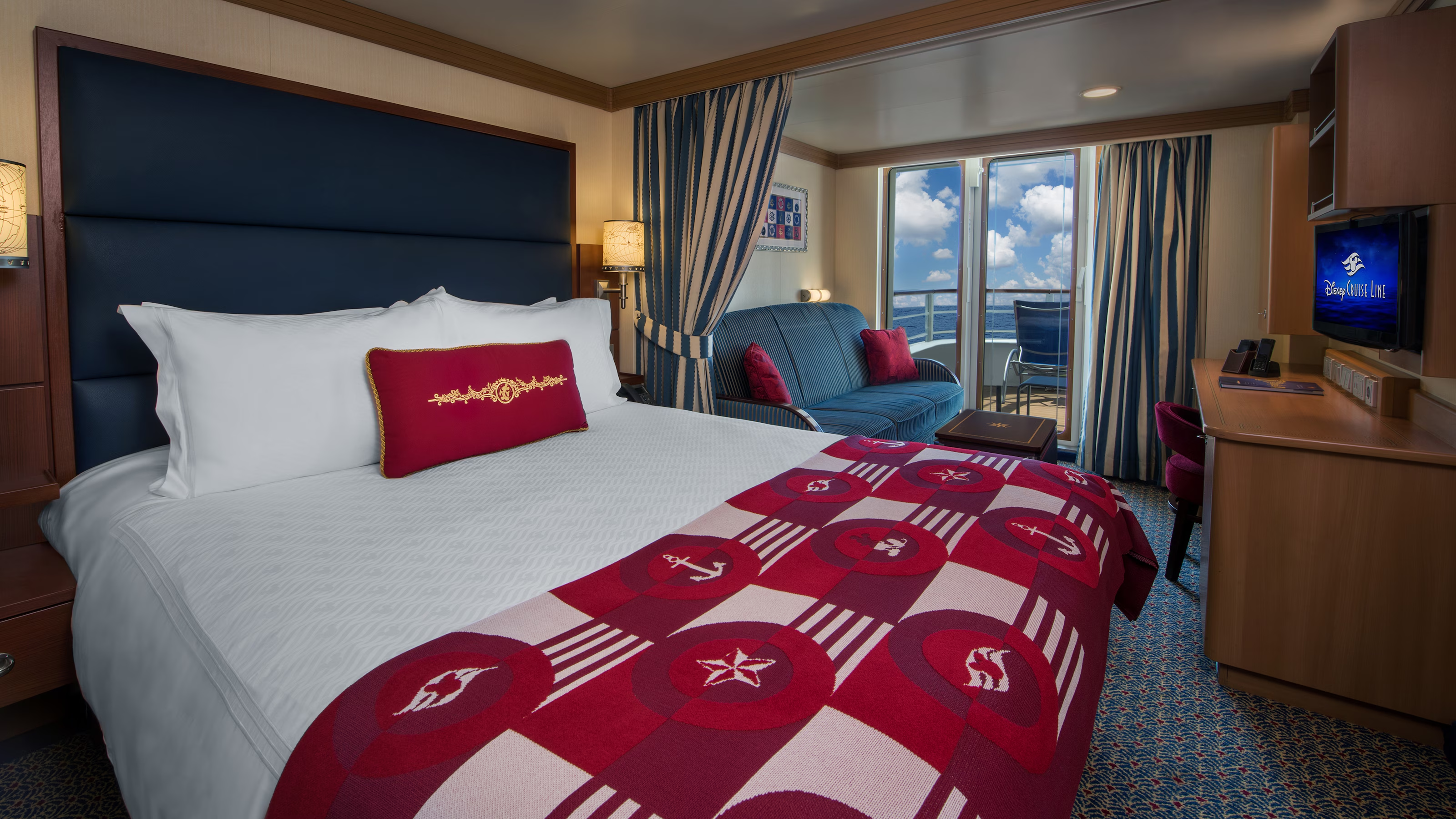 Your stateroom is included, of course. Disney Cruise Line has three main stateroom categories: Inside (no window), Oceanview (with a porthole), and Verandah (with a private balcony). Within those, there are several sub-categories and Concierge level on top. Room sizes and layouts vary by category and ship.
Food is the big one. You get dinner across three different themed restaurants (you rotate through all of them), the buffet, poolside burgers, and quick bites whenever you want them.
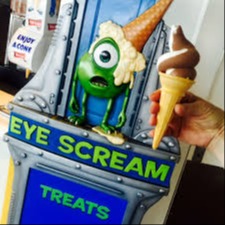 Soft-serve ice cream is free, all day, every day, at the drink stations on the pool deck.
Also included:
- Room service, including the famous Mickey Premium Ice Cream Bars delivered to your stateroom
- Kids' clubs (free, and your kids will probably ditch you for them within an hour of boarding)
- Pools, water slides, and deck games
- Broadway-level shows, character meet-and-greets, deck parties, and movies under the stars
What isn't included
- Alcoholic drinks
- Speciality coffee (your morning latte costs extra, though you can get Mickey art on top)
- The adult-only restaurants (Palo, Remy, Enchanté)
- Spa treatments
- Shore excursions
- Photo packages
- Souvenirs
- Wi-Fi
- The nursery for the youngest cruisers
What is rotational dining and how does it work?
 Rotational dining is one of the things that sets Disney Cruise Line apart. Instead of eating in the same restaurant every night, you rotate through three different themed dining rooms over the course of your cruise. Each has its own theme, menu, and atmosphere.
The unusual part is that your serving team comes with you. The same servers follow you from restaurant to restaurant every night, so by day two they know that your kid hates onions, you want extra bread, and Grandma needs decaf. By the last night they feel like people you've known for years.
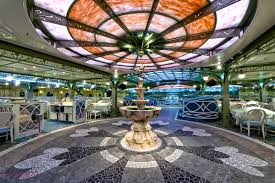 A few practical things to know:
- Check the Navigator app when you board. It shows your dining rotation, time, and table number.
- There are two seating times: Main Dining around 5:45 PM, and Second Dining around 8:15 PM. You pick when you book. [Verify current times against Disney's published schedule before publishing.]
- If you have allergies or special dietary needs, tell them. They handle this very well.
- Kids' menus are available everywhere.
- Don't fancy the rotation one night? Eat at Cabanas (the buffet) or one of the quick-service spots, or order room service.
You might be seated at a shared table with another family. If you'd rather have a private table, you can request one through the Disney Cruise Line website or in the Navigator app before you sail, and you can also ask at the dining help desk on embarkation day.
By the end of your cruise you've eaten in three completely different restaurants with a serving team who feels familiar. It's one of the small things that makes the cruise stick in your memory.
What are gratuities and can I pay them in advance?
 Gratuities are the recommended tip given to the crew members looking after you during your sailing. Unlike a restaurant at home where you tip one server at the end of one meal, on a cruise the same small team is looking after you for the whole trip.
At the time of writing (May 2026), the recommended amount is $16.00 USD per night, per stateroom guest, including infants and children. For Concierge guests it's $27.25 USD per night. [Verify current amounts on Disney's website before publishing, as these change periodically.]
Pre-paid gratuities are distributed across these roles:
- Dining room server
- Dining room assistant server
- Dining room head server
- Stateroom host
You have two ways to pay them:
- Pre-pay before you sail by logging into your Disney account or asking your travel agent to set it up. This covers everyone in your party, including children and infants.
- Let it post automatically to your onboard account at the same per-guest rate. You can adjust it at Guest Services if you want.
One or two days before your cruise ends you'll receive a printed sheet with four envelopes showing how your gratuities have been split. The sheet has four perforated sections that go into the matching envelopes, and if you want to add extra cash for anyone who's gone above and beyond you can do so here. You can hand the envelopes to your serving team and stateroom host directly, or drop them at Guest Services for them to pass on.
If you haven't brought cash and still want to add extra, Guest Services can charge it to your stateroom account.
How do payments work onboard? Do I need cash?
The ship is essentially cashless.
When you complete your online check-in before sailing, you link a credit or debit card to your account.
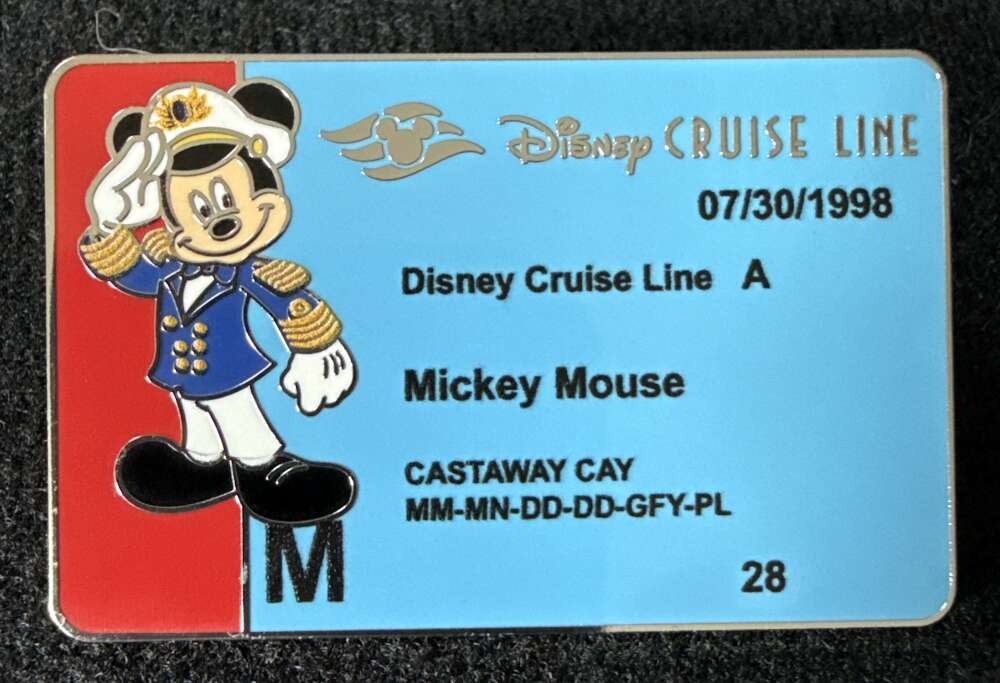 Once you board and head to your stateroom (usually around 1:30 PM), you'll find an envelope hanging on the metal hook outside your door, often called a "fish extender" hook. Inside is your Key to the World card, which acts as:
- Your room key
- Your ID for getting on and off the ship
- Your charge card for everything you buy onboard
Every purchase you make on the ship (drinks, spa, shopping, photos, speciality dining) goes onto your stateroom account, and at the end of the cruise it's all settled against the card you linked.
If you'd rather use your own bank card directly in the onboard shops, you can. Just remember the currency onboard is USD, so depending on your bank you may pay foreign transaction fees or currency conversion charges. Worth checking with your bank before you sail, especially if you're travelling from the UK.
You don't strictly need cash, but it's worth bringing some. You never quite know when you'll want it, and a mix of small bills ($1s, $5s, $10s) is more useful than a few $50s.
For international guests: US dollars are the currency onboard and at most Caribbean and Bahamian ports, so you don't need to swap into local currency for short stops.
Is there a dress code on a Disney cruise ship?
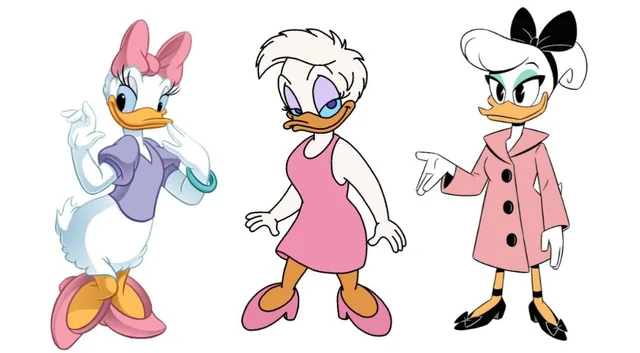 Disney Cruise Line is generally relaxed, but there are a few situations where you'll want to dress for the occasion.
Daytime: Comfortable casual clothing suited to your itinerary. For Caribbean or Bahamian sailings, that's shorts, sundresses, and swimwear cover-ups. For Alaska or the Norwegian Fjords, you'll want layers, long trousers, and proper shoes (it gets cold).
Dinner in the main dining rooms: Disney asks you to avoid tank tops, swimwear, and shorts. Jeans are fine. Think:
- Sundresses, skirts, or smart tops
- Polos, button-down shirts, chinos, or dark jeans
- Kids can dress comfortably with no special requirements
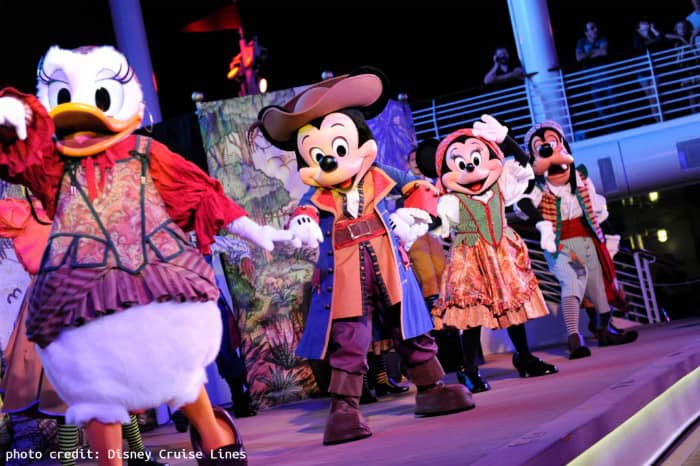 Themed nights: Pirate Night is the one most sailings include, and it's worth getting into. You'll usually find one bandana per person left in your stateroom on the day. You can stop there, or go all-in with a full pirate outfit. The characters dress in pirate costumes and you often get extra meet-and-greets with Captain Hook, Mr Smee, and Captain Jack Sparrow, with pirate music playing around the ship. For a proper sense of what to expect, see our video: https://youtu.be/9d6qPIsv1_w
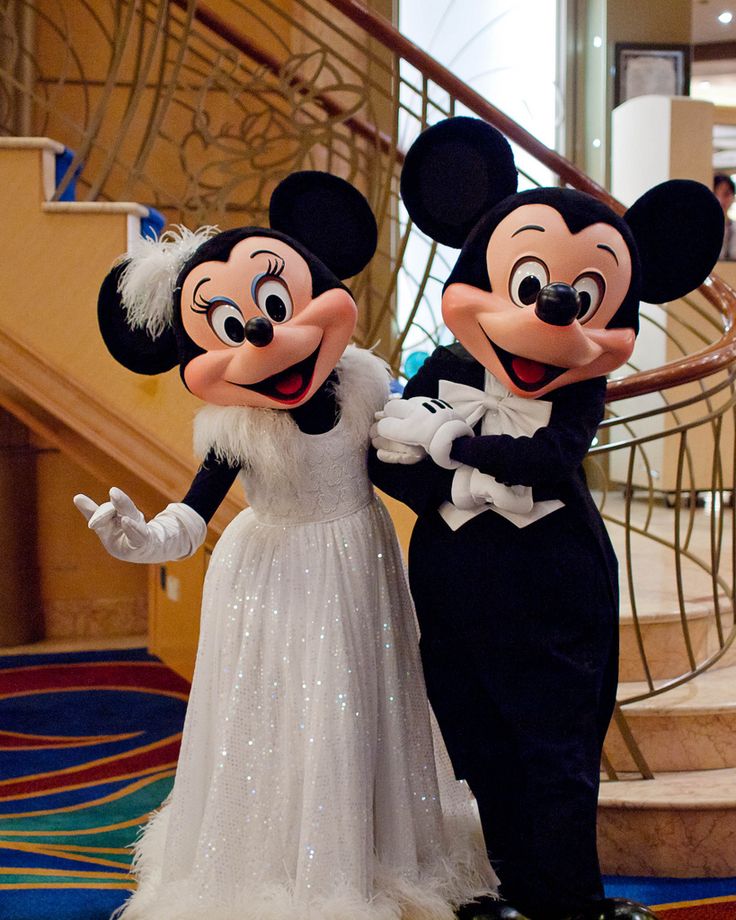 Formal and Semi-Formal nights: Longer sailings (generally 7 nights or more) include a Formal and a Semi-Formal night. Dressing up is entirely optional, but plenty of guests enjoy the excuse for photos. [Verify which sailings currently include these nights.]
Optional extras: Lots of families pack matching shirts, Disney Bound outfits, or themed pyjamas (the Merrytime Christmas cruises in particular). There's no rule, but it's part of the fun if you're into it.
The adult-only restaurants (Palo, Remy, Enchanté): These have their own dress codes which are a step up. No jeans, shorts, or flip-flops, Smart casual at minimum.
Will I get seasick?
 Most first-time cruisers are surprised by how stable the ships feel. By day two you usually stop noticing the motion at all. Disney's ships are large and fitted with stabilisers, so they're remarkably steady, but wind and weather can still occasionally make themselves known.
It's worth packing a few remedies just in case:
- Dramamine, Bonine, or non-drowsy motion sickness tablets
- Sea-Bands (acupressure wristbands, drug-free and good for kids)
- Ginger sweets or ginger tea
If you do feel it onboard:
- Step out onto an open deck and look at the horizon
- Ask in the dining room for green apples or ginger, both of which settle the stomach (your servers know this)
- Guest Services has free motion sickness tablets if you ask
- The onboard Medical Centre can help with stronger remedies, though it isn't cheap
If you're prone to motion sickness, take a tablet the night before sailing and again the morning you board. Prevention is much easier than treatment.
One more thing: when you disembark, don't be surprised if you can still feel the motion of the sea for a day or two. That's normal and it passes.
How early can I board, and does it matter?
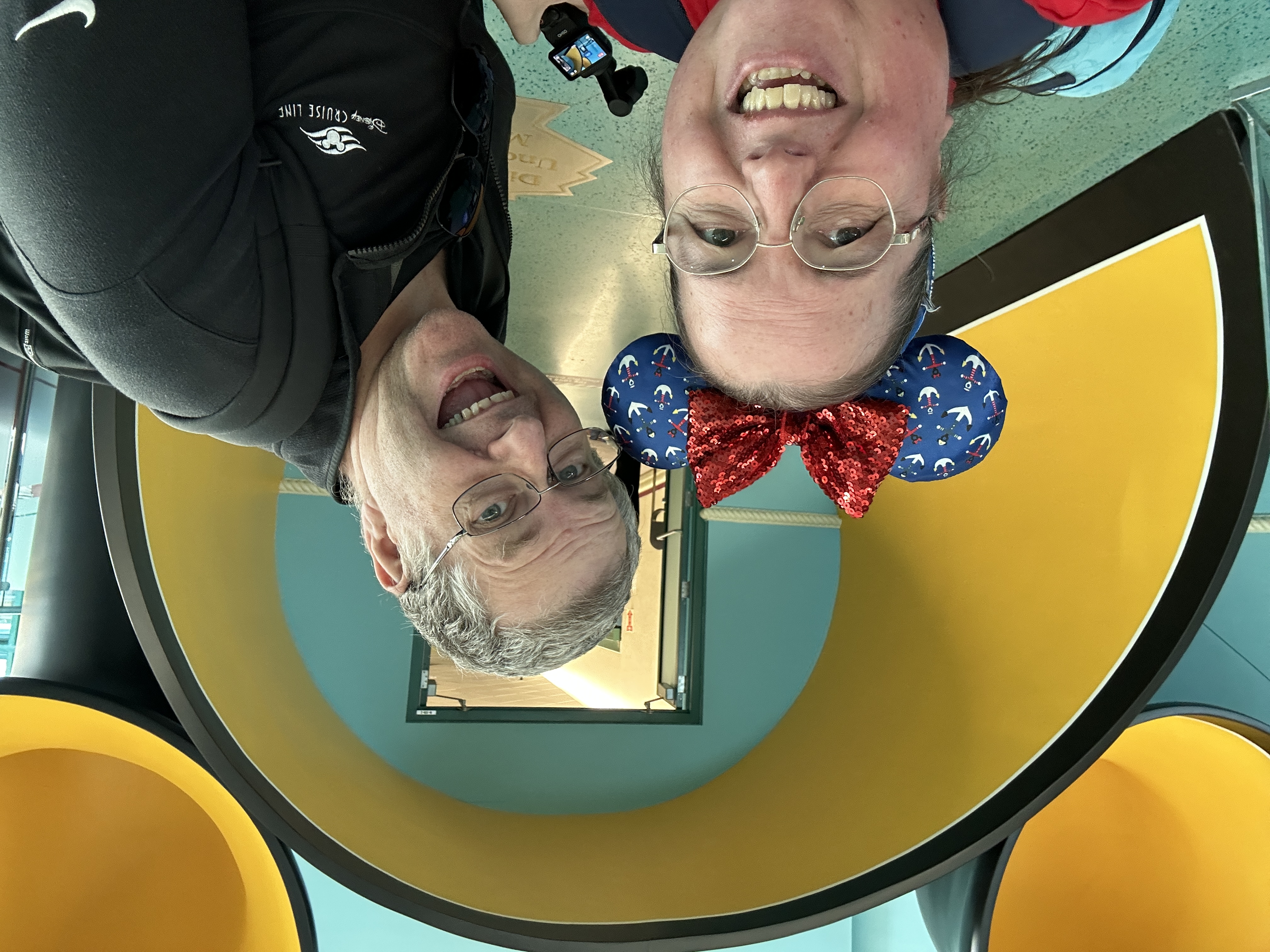 About 30 days before your sail date (sometimes earlier for repeat cruisers and Concierge guests), online check-in opens on the Disney Cruise Line website or Navigator app. [Verify the current check-in window.] This is when you:
-
- Complete your guest information
- Upload your security photo
- Sign documents
- Choose your Port Arrival Time (PAT)
What is a PAT?
Your Port Arrival Time is the slot in which you can arrive at the cruise terminal to start the embarkation process. Depending on your departure port, the earliest slots generally start from around 10:45 AM and run in 15-minute increments. [Verify earliest PAT for your audience's most common ports.] If you arrive before your slot you'll either be asked to come back or wait in a holding area until your time opens.
How long does embarkation actually take?
Around 30 minutes, sometimes more. When you arrive at the terminal you'll go through airport-style security and then check-in. Any issues with your online check-in can be cleared at the port, and if you're planning to use a MagicBand+ onboard they'll link it to your room.
Earlier PAT times are worth picking if you can. You get more time on the ship to explore and get your bearings, the pools open at 12 noon, and you can have lunch and settle in properly.
I'll do a more detailed post on embarkation day soon.
Important:
You must be checked in and onboard by the cut-off time, typically 3:45 to 4:00 PM for sailings departing US ports. Miss it and the ship sails without you, no exceptions.
If you're flying in for the cruise, fly the day before. Same-day flights are a real risk because flight delays, weather, and traffic can all stand between you and the ship.
If you're using Disney Cruise Line transportation, your Port Arrival Time will be set by the time your transport arrives at the port.
That's the lot. Have a brilliant first cruise.


